

How to Fit Cowboy Boots Online: A Complete Guide
Table of Contents
- How to Fit Cowboy Boots Online: Understanding Boot Anatomy and Sizing Basics
- Measuring Your Feet for Custom Western Boots
- The Importance of the Instep and Arch Support
- Understanding Heel Slip and How Much Is Normal
- Breaking in Leather Cowboy Boots: Timeline and Expectations
- Sizing Exotic Leathers: Gator, Ostrich, and Python
- Your Fit Check Checklist and Return Policy Navigation
- Troubleshooting Specific Foot Shapes and Fit Issues
- Frequently Asked Questions
Last Updated: September 4, 2026
How to Fit Cowboy Boots Online: Understanding Boot Anatomy and Sizing Basics
Fitting cowboy boots online requires understanding how western boot construction differs from sneakers or dress shoes. The most common mistake is assuming standard shoe sizing applies. Western boots are built on a different last, with a higher heel, a narrower heel cup, and a vamp designed for the ball of the foot, not the arch.
Getting the fit right from the start saves months of discomfort or wasted money. With the right measurements and understanding of leather stretch, you can confidently order online.
Western Boot Construction and How It Affects Fit
Western boots sit on a steeper pitch than everyday shoes. The heel is typically 1.5 to 2 inches, and the vamp is cut higher and narrower to lock your foot in the stirrup and prevent forward slide during riding (peer-reviewed research).
The heel cup is narrower and deeper in western boots, which is where heel slip occurs. Exotic leathers like hornback gator and python have less give than standard leather, requiring more precise sizing.
Why Cowboy Boot Sizing Differs from Sneaker Sizing
A size 10 in running shoes might be a size 9 or 8.5 in western boots because they're cut narrower overall, with a smaller toe box, tighter instep, and proportionally smaller heel cup.
Most western boot makers size down 0.5 to 1.5 sizes from street shoe size. Measuring your actual foot, not relying on shoe size, is the only reliable method for ordering online.
Measuring Your Feet for Custom Western Boots
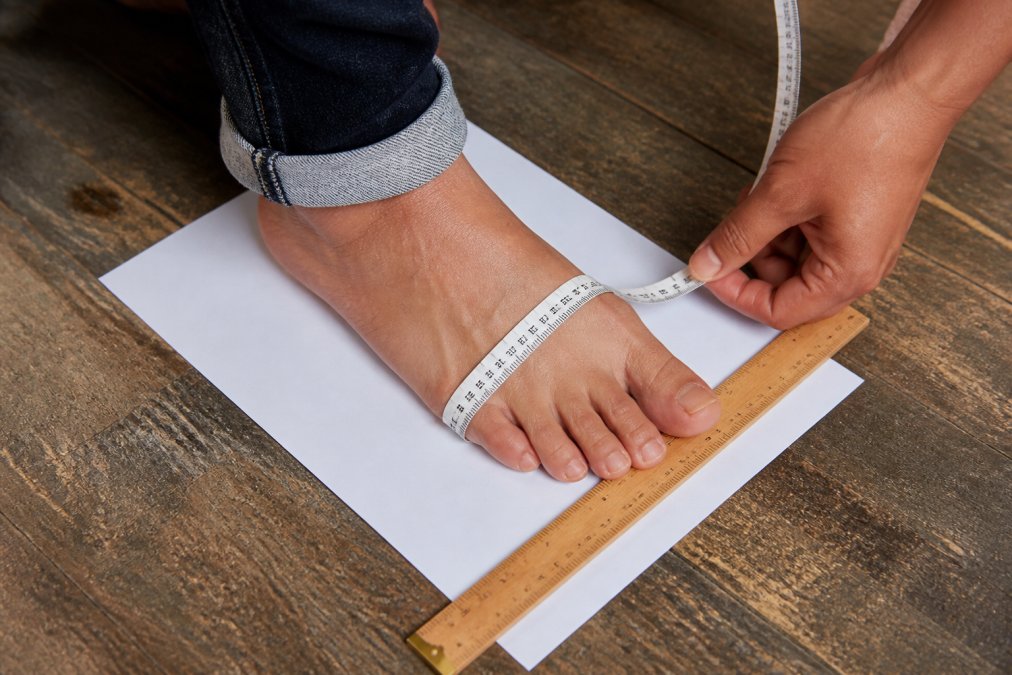
Accurate measurement is essential. You need three key measurements: overall length, width at the ball of the foot, and instep circumference.
The Right Tools and Technique
You'll need a soft measuring tape, a ruler, and a flat surface. Measure both feet while wearing the socks you plan to wear with your boots, standing with weight distributed evenly.
Measure length from heel to the tip of your longest toe. Measure width at the widest point across the ball of your foot. For instep, wrap the tape snugly around the highest point of your foot, just above the arch. Most online retailers provide a sizing chart that translates these measurements into their boot sizes.
Measuring Instep, Ball of the Foot, and Heel
The instep measurement determines whether the vamp will sit properly. Too tight causes pressure across the top of your foot; too loose causes your foot to shift forward and creates heel slip.
The ball of the foot width is where your weight transfers when you walk. Measure at the widest part of the ball, not the toes. This prevents pinching and ensures the boot flexes where your foot bends.
A heel that's snug but not tight is the goal; too loose causes friction and blisters during break-in.
The Importance of the Instep and Arch Support
The instep is where most online fit problems originate. Western boots lack cushioned arch support; support comes from the boot's structure, vamp, heel counter, and sole construction.
How Instep Measurement Determines Comfort
Your instep circumference determines whether the vamp accommodates your foot's height. A tight instep creates pressure that doesn't ease during break-in; a loose instep causes friction and heel slip.
A vamp cut too tight restricts your toes; too loose lets your foot slide forward. Instep measurement is as critical as overall length when ordering online.
Understanding Heel Slip and How Much Is Normal
Heel slip is the movement of your heel inside the heel cup when you walk. A quarter-inch is normal and expected during break-in as leather softens and molds to your foot (peer-reviewed research).
Heel Slip vs. Heel Lift: Knowing the Difference
Heel slip is vertical movement inside the boot; heel lift is the sensation of your heel rising out with each step. A boot with proper heel slip feels secure; excessive heel lift feels like your foot is escaping.
A deeper, narrower heel cup holds your foot more firmly and tolerates less slip. When measuring for online purchase, a snug heel is the target.
Friction and Pressure Points During Break-In
During the first 10 to 20 hours of wear, leather is stiff and creates friction. This friction combined with pressure points causes blisters as the leather softens and the footbed conforms to your foot.
Common pressure points are the heel counter, vamp, and sides of the heel. Conditioning your footbed with leather conditioner and wearing the boots in short sessions speeds up break-in.
Breaking in Leather Cowboy Boots: Timeline and Expectations
Most quality leather boots require 20 to 40 hours of wear before feeling genuinely comfortable (peer-reviewed research). The timeline depends on leather type, boot construction, and wear frequency.
Leather Stretch and Vamp Softening
Leather stretches roughly 0.25 inches over the first month. Exotic leathers like python and ostrich stretch less than cowhide, so sizing snug is acceptable.
The vamp softens as leather fibers relax, reducing pressure and allowing more toe room. The instep becomes more flexible, reducing tightness over the first few weeks.
Conditioning Your Footbed and Heel Cup
Applying leather conditioner to the interior, especially the footbed and heel cup, accelerates break-in. Apply sparingly and let it absorb for a few hours before wearing.
The heel cup benefits most from conditioning. Many experienced western boot wearers condition the interior before the first wear.
Sizing Exotic Leathers: Gator, Ostrich, and Python
Exotic leathers behave differently than cowhide. Hornback gator is stiffer and stretches less; ostrich is softer; python is dense. These differences affect how you approach sizing.
How Exotic Leather Construction Affects Fit
Hornback gator creates more friction during break-in and doesn't stretch as much as cowhide, so size closer to your actual foot measurement.
Ostrich leather is softer and stretches more readily, so you can size slightly snug knowing the leather will conform faster.
Python leather is dense and stretches minimally, so precision in measurement is critical. Size as close to your actual measurements as possible.
Your Fit Check Checklist and Return Policy Navigation
When your boots arrive, inspect them immediately with a visual fit check to reveal whether sizing is workable.
Visual Fit Check: What to Look For on Arrival
Put the boots on and stand for a few minutes. The toe box should feel snug but not restrictive. The vamp should sit smoothly without bunching or gaps. The heel should feel secure in the heel cup.
Walk around for a few minutes. Your heel should slip slightly (a quarter-inch is normal). Your foot should not shift forward. The ball of the foot should feel supported, not pinched.
If the boot feels painfully tight in the vamp or instep, it may be oversized. If your heel moves more than half an inch, it's undersized.
Understanding Your Options if Fit Isn't Right
Give the boots a genuine break-in period of 10 to 15 hours over a week or two. Many boots that feel wrong on day one feel right by day ten.
If after break-in the fit is genuinely problematic, contact the maker or retailer about exchange options. Some makers offer exchanges within a window; others don't.
Troubleshooting Specific Foot Shapes and Fit Issues
Not all feet are average. Wide feet, narrow heels, high insteps, and low arches all require adjustments to the standard sizing approach.
Wide Feet and Width Sizing Considerations
If your foot is wide at the ball, communicate your ball width measurement clearly when ordering. A maker who understands your measurements can recommend a last that accommodates width without adding unnecessary length.
Wide feet often need a slightly longer boot because width and length are proportional in boot construction. Sizing up for width can create heel slip if your heel is proportionally narrow.
Narrow Heels and Insole Compatibility
A narrow heel requires a narrower heel cup and may benefit from a thin insole to reduce heel slip without changing overall fit.
Ask the maker whether the boot's interior has room for an aftermarket insole. If you plan to use orthotics or a custom insole, mention this when ordering.
Fitting cowboy boots online is achievable when you approach it methodically. Measure your feet accurately, understand how western boot construction differs from everyday footwear, and give the leather time to soften and mold to your foot. When you're ready to order, bring your measurements and your foot shape to the conversation, and ask questions about how a specific leather or last will perform.
Frequently Asked Questions
How do I measure my feet accurately at home for cowboy boots?
Place a ruler against a wall and stand on a sheet of paper with your heel touching it. Mark where your longest toe ends, then measure the distance. For width, measure across the ball of your foot at its widest point. Measure both feet, they're often different sizes. Take these measurements in the afternoon when feet are slightly swollen, and wear the socks you plan to wear with your boots. This approach is more reliable than relying on sneaker sizes, which don't translate directly to western boot sizing.
How much heel slip is normal in cowboy boots when they're new?
A quarter-inch to half-inch of heel slip is typical when boots are brand new. The leather stretches and molds to your foot during the break-in period, which reduces this movement. However, excessive slippage, more than three-quarters of an inch, suggests the heel counter is too large or your instep measurement was off. The heel cup should feel snug enough that your heel doesn't lift with each step, but loose enough that you can slide a thin finger between your heel and the boot.
Should my cowboy boots feel tight across the instep when I first put them on?
Yes, a snug fit across the instep is normal and necessary. The instep is where the vamp meets the shaft, and this area controls overall stability. During the break-in period, leather stretches gradually, so boots that feel slightly tight initially will become more comfortable. However, tightness should feel like snugness, not pinching pain. If you experience sharp pressure points on the instep after a few hours of wear, the instep measurement may be too small, requiring a larger size or a different last.
How long does it take to break in leather cowboy boots?
Most leather cowboy boots require 20 to 40 hours of wear to reach comfortable break-in. During this period, the leather stretches, the footbed compresses slightly, and your foot acclimates to the boot's structure. Conditioning the footbed and heel cup with leather conditioner can speed up softening. Don't expect full comfort until you've worn them consistently for several weeks.
How do exotic leathers like gator and ostrich affect cowboy boot sizing?
Exotic leathers typically have less stretch than traditional leather, so they may feel stiffer initially. Hornback gator and belly-scale caiman have different stretch patterns depending on the scale direction, scales running lengthwise offer more flex along the shaft. Ostrich quill boots tend to have excellent breathability but similar break-in timelines. Python vamps are more rigid and may require a slightly roomier toe box. When ordering exotic leather boots online, communicate your foot width and instep measurement clearly, and ask about the specific leather's stretch characteristics to ensure proper fit.
What's the difference between heel slip and heel lift, and why does it matter?
Heel slip is slight movement of your heel inside the boot during the break-in period, which is normal. Heel lift occurs when your heel actually rises out of the heel cup with each step, causing friction and potential blistering. Heel lift indicates the heel counter is too loose or your heel measurement was incorrect. Proper fit means your heel stays anchored in the heel cup while the leather gradually stretches around your foot. If you experience persistent heel lift after 20 hours of wear, the boots likely need a smaller size or adjustment.
Can I use orthotic insoles with custom western boots?
Yes, most hand-welted western boots can accommodate aftermarket orthotic insoles, though this requires planning during the ordering process. When ordering custom boots, mention if you plan to use orthotics, the bootmaker can adjust the footbed height and arch support accordingly to prevent the boot from becoming too snug. Remove the standard insole and replace it with your orthotic, ensuring the overall fit remains snug at the instep and heel. Exotic leather boots may have less internal depth, so confirm compatibility before ordering if you require thick orthotics.
What should I look for on my fit check when custom cowboy boots arrive?
When your boots arrive, check that the vamp sits smoothly across the ball of your foot without bunching or gaps. The instep should feel snug but not painful. Your heel should sit firmly in the heel cup with minimal slip. The toe box should have enough roominess that your toes aren't cramped, you should be able to wiggle them slightly. Look for even stitching along the welt and vamp, and inspect the sole depth and condition as described by the maker. Put them on with the socks you'll wear them with, and walk around indoors for at least 15 minutes to assess initial comfort.
This article was written using GrandRanker